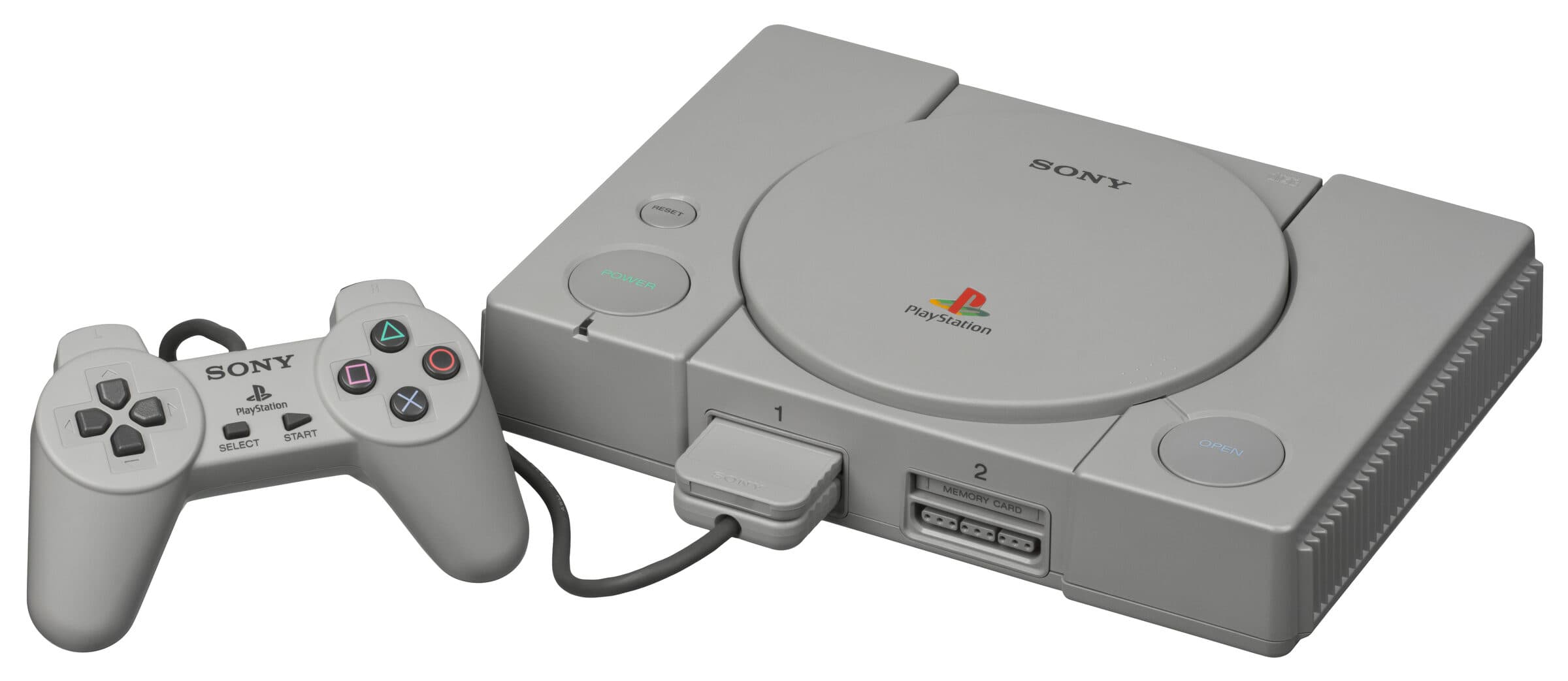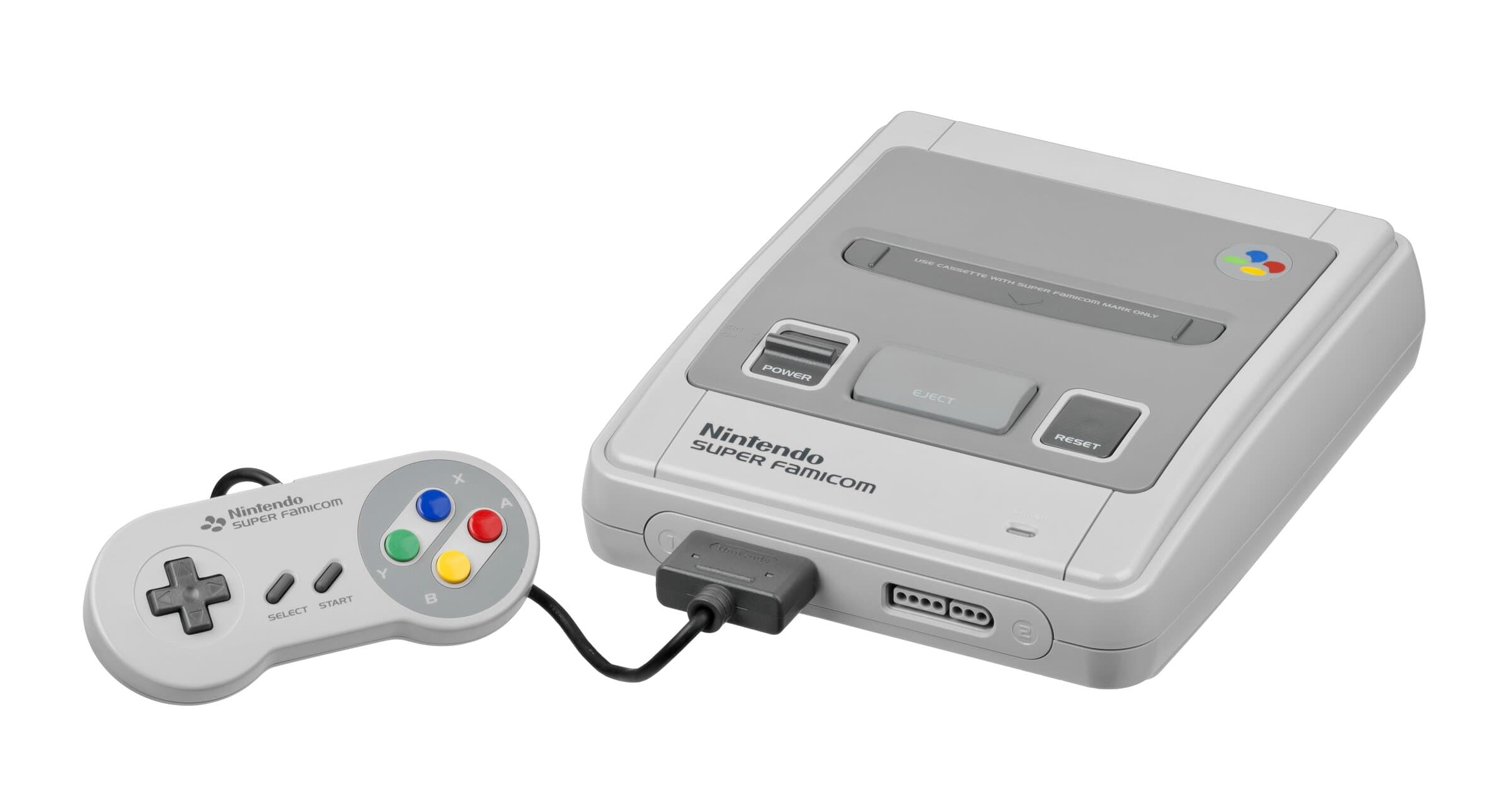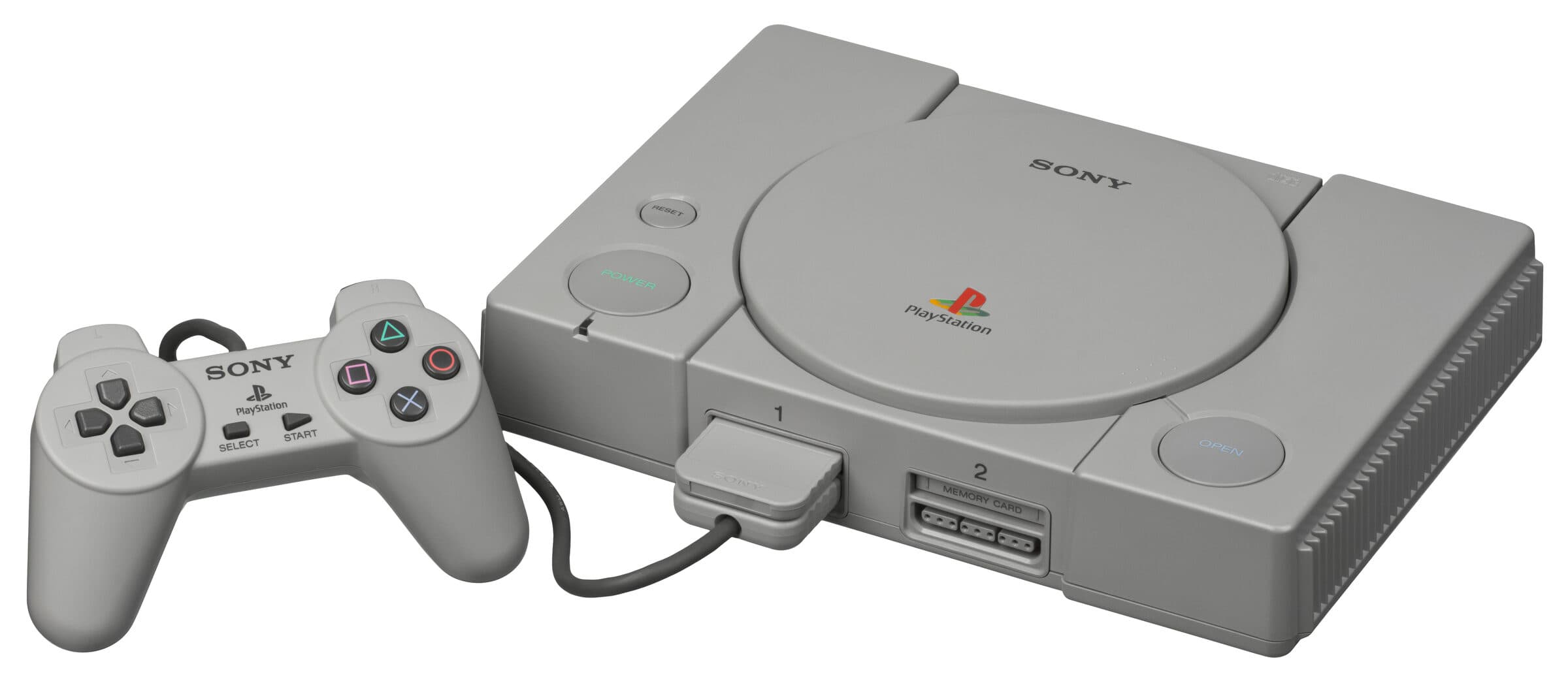
The original PlayStation began life as a CD-ROM add-on for the Super Nintendo. Nintendo and Sony designed it together in the early 1990s, then Nintendo abruptly switched partners to Philips at CES 1991, leaving Sony with a half-finished SNES expansion and a wounded Ken Kutaragi. Three years later that wounded engineering team shipped the PlayStation, sold over 100 million units, and ended Nintendo's home-console dominance for a generation.
What's inside
The PlayStation is a 32-bit MIPS R3000A clocked at 33.86 MHz, paired with a custom Sony GPU that does 2D rasterisation with hardware texture mapping, and a Geometry Transformation Engine that handles the 3D maths. It cannot do per-pixel lighting, has no sub-pixel precision (which is why polygons jitter and warp at distance), and uses fixed-point integers for vertex coordinates, but it can push 360,000 textured polygons per second in ideal conditions, which in 1994 was a number nobody had seen on a home console before. 2 MB of main RAM, 1 MB of video RAM, and a CD-ROM drive holding 650 MB per disc.
What it shipped with
The original controller was a digital D-pad and four face buttons in a diamond, plus the four shoulder buttons (L1/L2/R1/R2), no analog sticks, no rumble. The Dual Analog Controller arrived in 1997, the DualShock with rumble in 1998, and the DualShock layout became the default for everything PlayStation has shipped since. Memory cards held 128 KB across 15 save blocks; cards were swappable, which made the schoolyard ritual of borrowing a friend's Final Fantasy VII save into a small economy.
The catalogue
Sony courted third parties aggressively from launch. The PlayStation library is the first one where the third-party output dwarfed the first-party, Final Fantasy VII (Square), Metal Gear Solid (Konami), Resident Evil (Capcom), Tomb Raider (Eidos), Tekken (Namco), Tony Hawk's Pro Skater (Activision), Crash Bandicoot and Spyro (Naughty Dog and Insomniac, both then independent of Sony). Add Sony's own Gran Turismo and Wipeout and you have a library that defines what a fifth-generation home console actually meant.
Why it still matters
The PlayStation got 3D right enough to ship at scale, normalised CD-ROM as the home console medium for the next decade, and built the brand that still anchors Sony's gaming business. It also made consoles cool, the Wipeout tie-ins with the Chemical Brothers and Future Sound of London, the demo discs in PC magazines, the launch ad campaigns. After the PlayStation, "video games" stopped being a children's category for the rest of the medium's history.