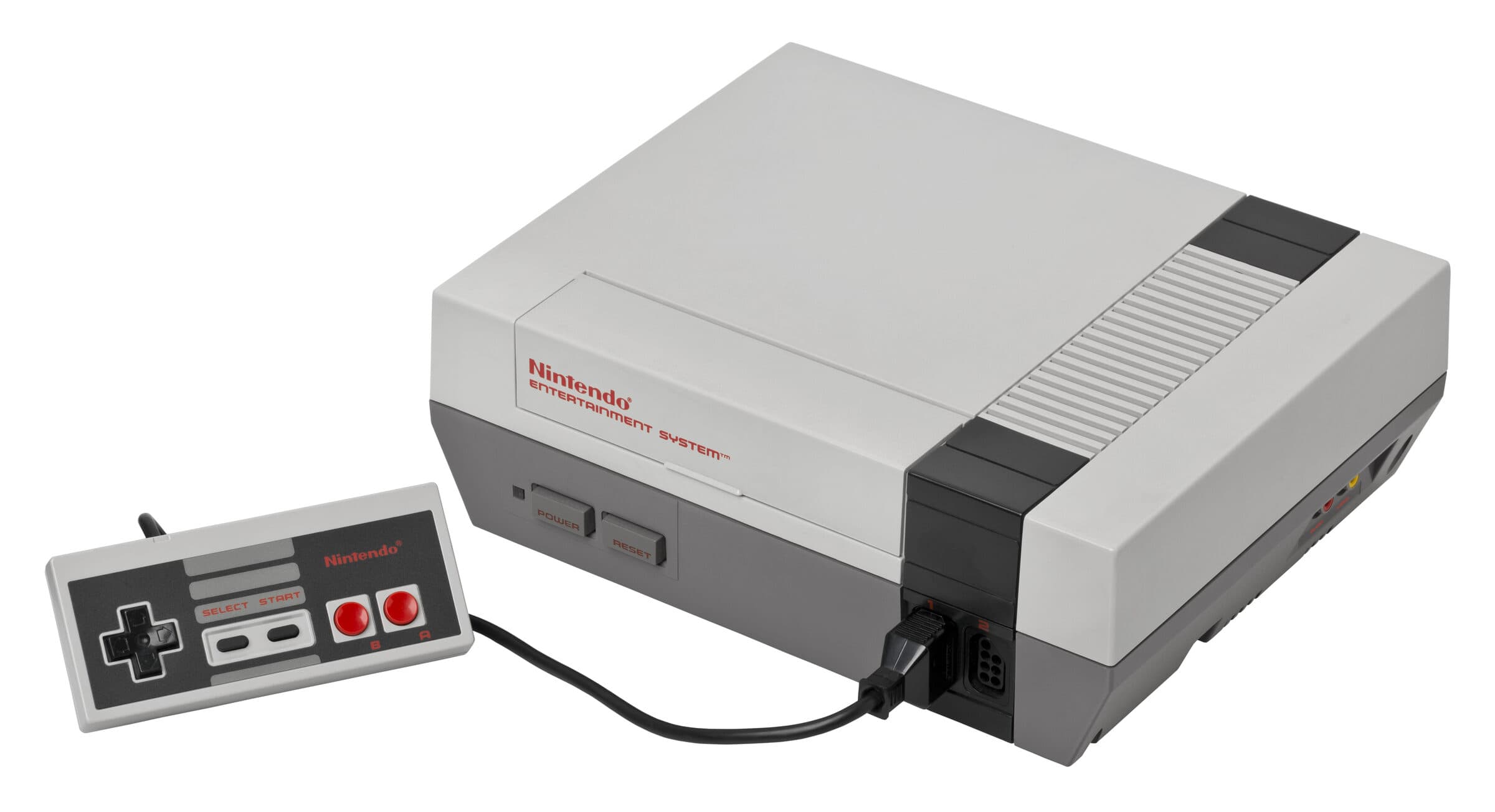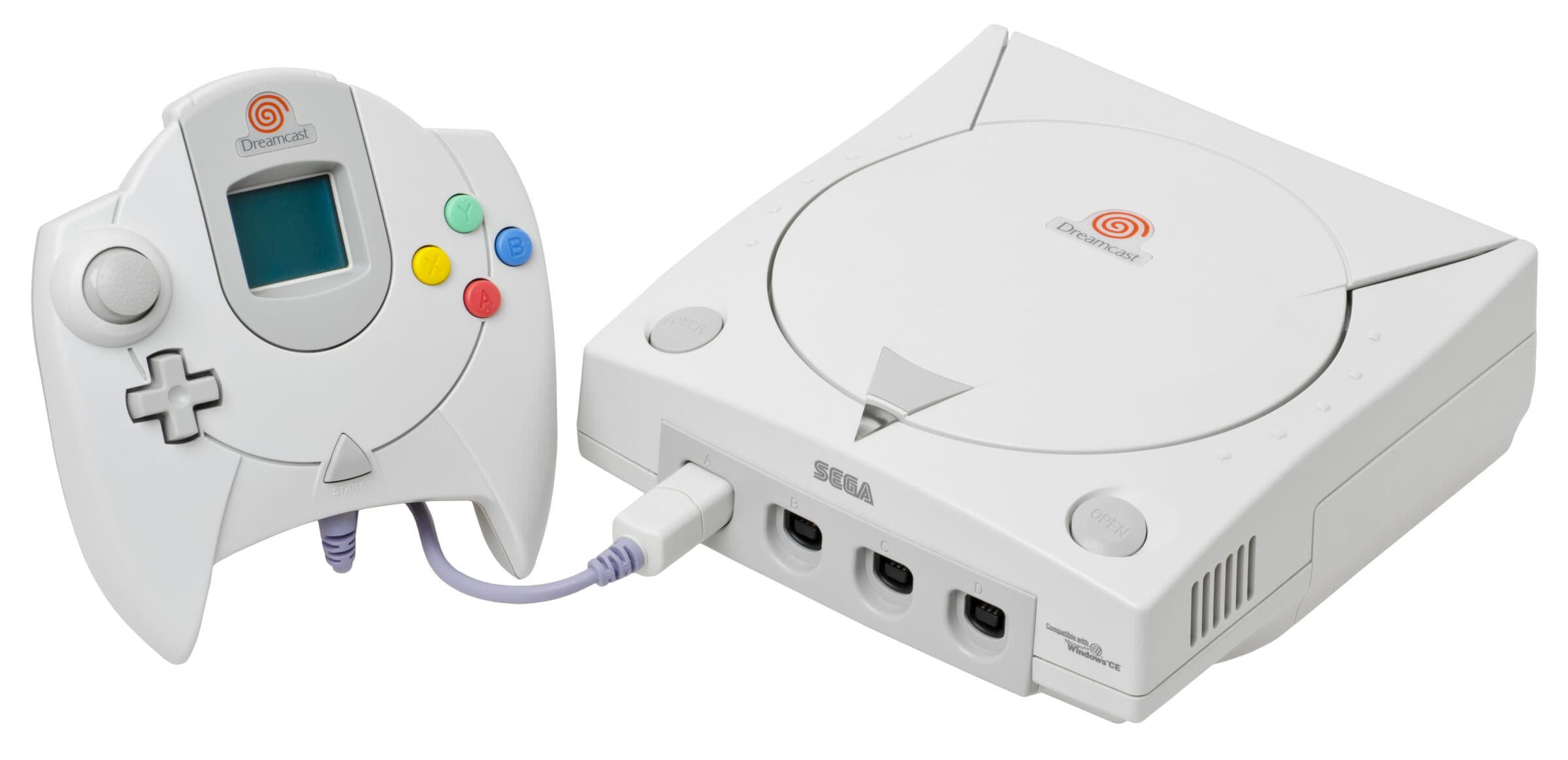
The Dreamcast launched in Japan in November 1998, North America in September 1999 (the famous 9/9/99), and Europe in October 1999. It sold around 9 million units before Sega discontinued it in 2001 and exited the console hardware business permanently. In every respect that matters except commercial success, it was years ahead of what came after.
What's inside
A Hitachi SH-4 RISC CPU at 200 MHz, paired with the NEC PowerVR2 graphics processor, the same family that powered SEGA's NAOMI arcade hardware, which is why Dreamcast arcade ports were close to pixel-identical to the cabinet originals. 16 MB of main RAM, 8 MB of video RAM, and a built-in 33.6 kbps modem (later a 56k or, in Japan, an Ethernet adapter via the BBA, Broadband Adapter). The Dreamcast was the first console to ship with internet connectivity as standard, and Sega built its launch identity around "online from day one" two full years before Microsoft would attempt the same.
What it shipped with
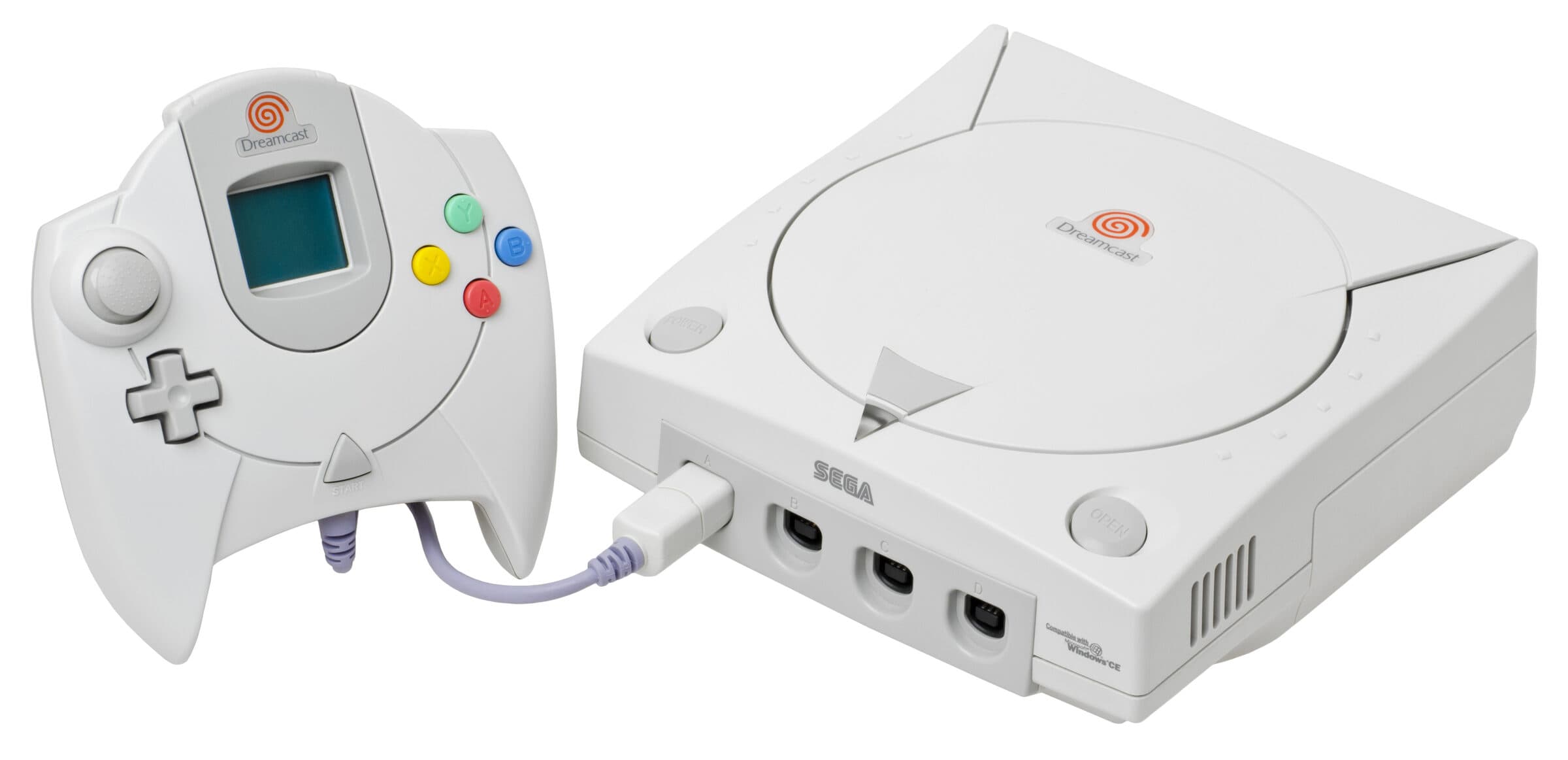
The Dreamcast controller's defining feature was the slot for the VMU, the Visual Memory Unit, a small LCD-equipped memory card you could pop out and use as a standalone toy. Sonic Adventure's Chao garden ran on the VMU. Resident Evil: Code Veronica showed inventory items on the VMU's screen. Some games used it to display map overlays the player on the other end of split-screen couldn't see. It was the kind of idea that only Sega would think of, and only Sega would commit to.
The console itself was small, white, and quiet by the standards of the era. Australian launch price was around AU$499.
The catalogue
For a console that lived two and a half years on shelves, the library is remarkable. Soulcalibur (the launch title that benchmarked the hardware), Shenmue and Shenmue II, Sonic Adventure 1 and 2, Skies of Arcadia, Jet Set Radio, Crazy Taxi, Power Stone 1 and 2, Phantasy Star Online, Resident Evil: Code Veronica, Rez. Sega's house teams, Smilebit, Hitmaker, AM2, were on a creative tear that did not survive the platform's death.
Why it still matters
The Dreamcast was a console of firsts that nobody got to capitalise on: first online by default, first VGA output, first attempt at downloadable content (small game updates over the modem), first commercial console with web-browsing baked in. Sega lost on hardware before any of that paid off. But the Dreamcast catalogue, small, weird, ambitious, often beautiful, is the strongest argument that what makes a console worth playing is not what wins the generation, but what its makers were free to attempt.