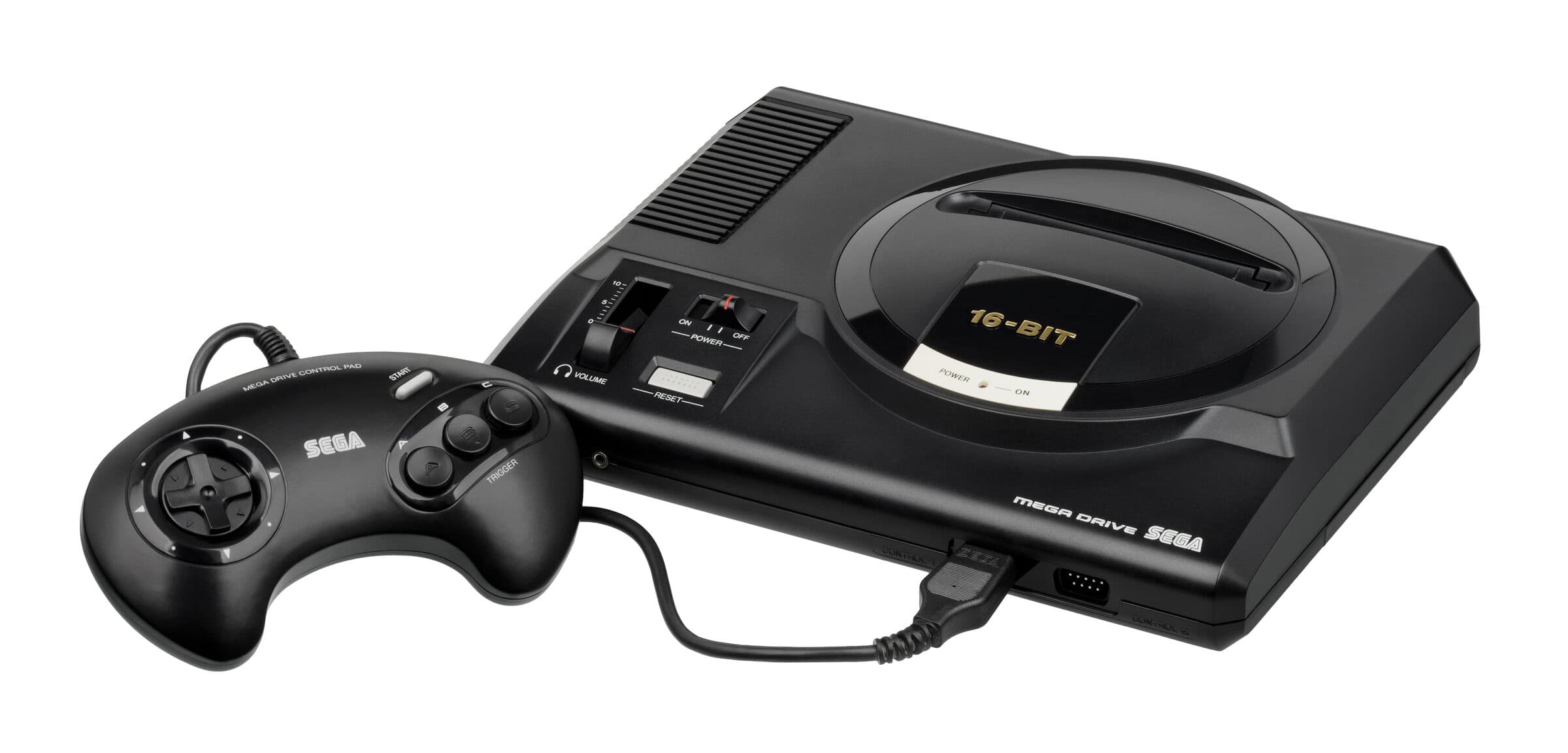
The Mega Drive is the only console Sega ever sold in serious quantities. It launched in Japan in 1988, North America (as the Genesis) in 1989, and PAL territories in 1990. For a window of roughly four years it outsold the Super Nintendo in North America, and Sega's marketing, "Genesis does what Nintendon't", established the sneering anti-Nintendo identity Sony would inherit a decade later.
What's inside
Two CPUs. The main processor is a Motorola 68000 at 7.6 MHz, the same chip that ran the original Macintosh, the Amiga, and most of the arcade boards Sega had shipped through the 1980s. It is paired with a Zilog Z80 that handles audio and provides backwards-compatibility with the older Sega Master System. Sound is a Yamaha YM2612 FM synth (the source of every guitar-stab and bass-thud you remember from the era) plus a Texas Instruments PSG for chip-tune effects.
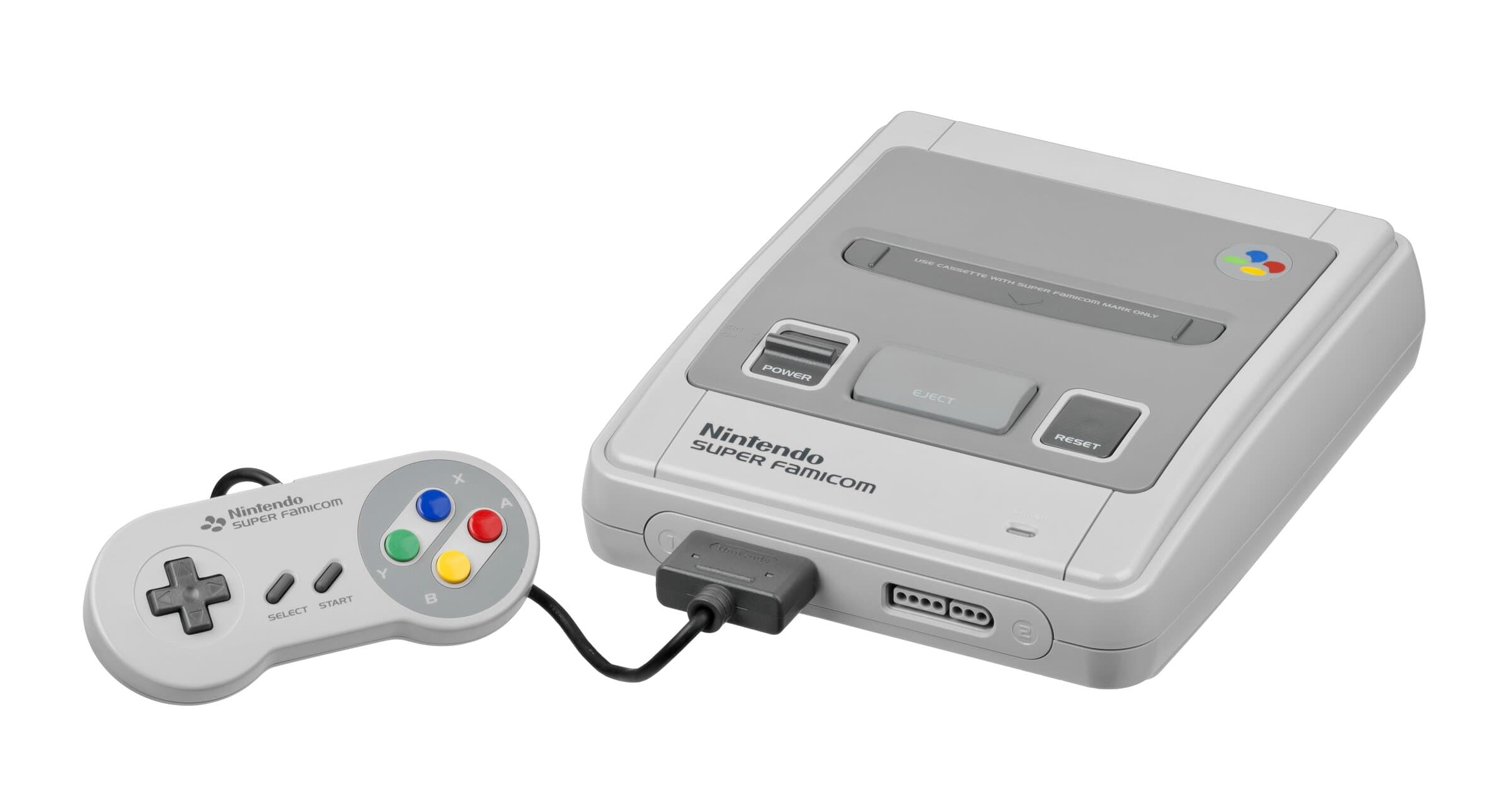
Graphically the Mega Drive is roughly Nintendo's equal: 64 colours on screen from a 512-colour palette, two scrolling backgrounds, 80 sprites, no Mode 7 equivalent. What it had instead was raw CPU clock, the 68000 was nearly twice as fast as Nintendo's 5A22, and that meant the Mega Drive was the better console for action games where fast scrolling beat layered effects.
What it shipped with
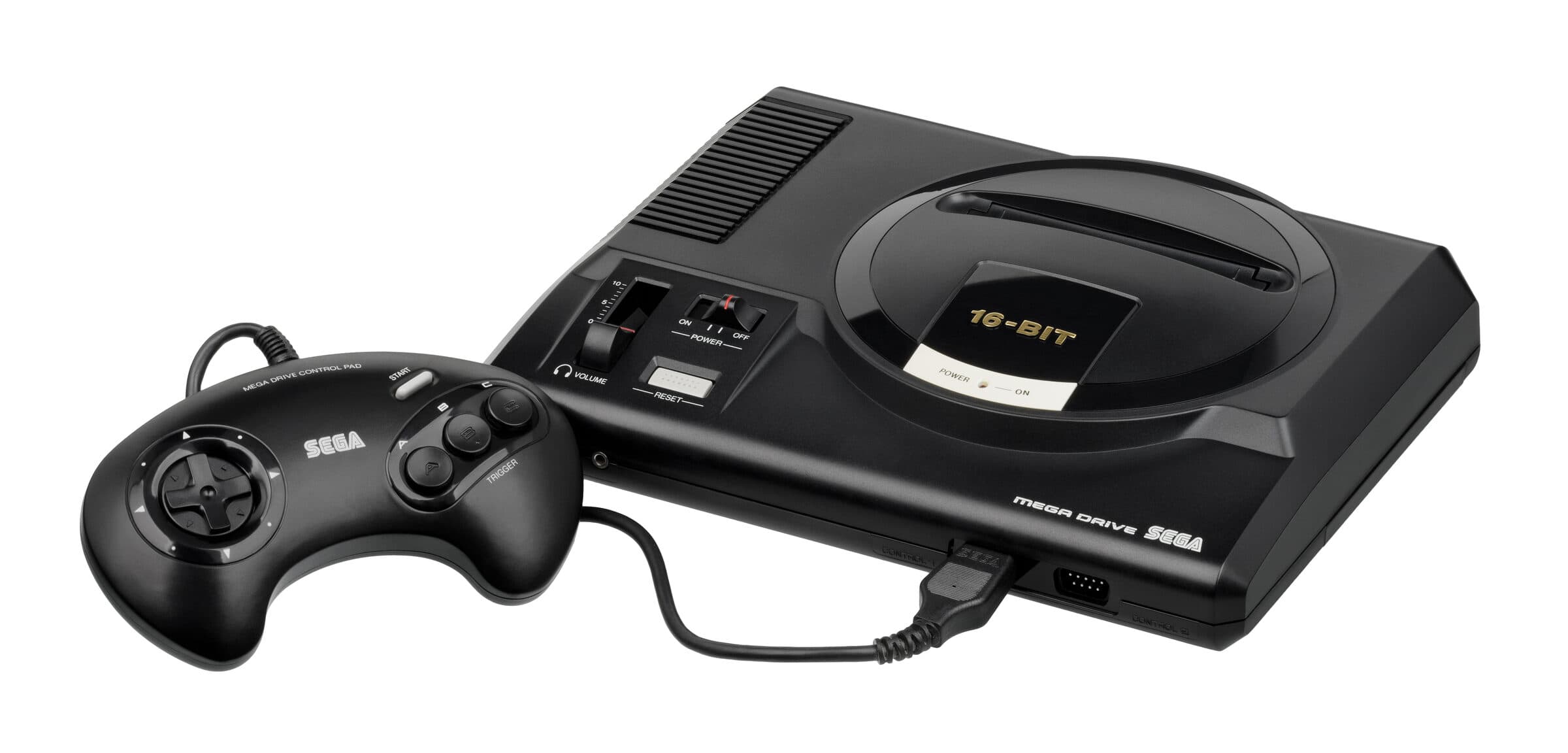
The original Model 1 controller was three buttons and a D-pad. Sega added the six-button pad in 1993 for the fighting-game wave (Street Fighter II Special Champion Edition, Mortal Kombat), and the six-button became the default for anyone who took the platform's late-period catalogue seriously. The console itself shipped with composite AV cables in most regions. The North American Model 1 has the famously over-confident "HIGH DEFINITION GRAPHICS" emboss across the top.
The catalogue
Sega's house teams were on a hot streak. Sonic the Hedgehog (1991) made the platform a household name. The Streets of Rage trilogy is still the genre's high point. Phantasy Star II through IV are quietly some of the best JRPGs of the era. Gunstar Heroes, Shining Force, Comix Zone, Ecco the Dolphin, ToeJam & Earl. The third-party catalogue is patchier than Nintendo's but the highs are very high.
Why it still matters
The Mega Drive proved that competition was possible. It also showed Sega's ceiling: brilliant first-party games, audacious marketing, and a hardware roadmap that fragmented the second they tried to extend it (32X, Sega CD, Saturn). The console's shape, black, ridged, the red banner, is one of the most recognisable industrial designs in the industry's history.