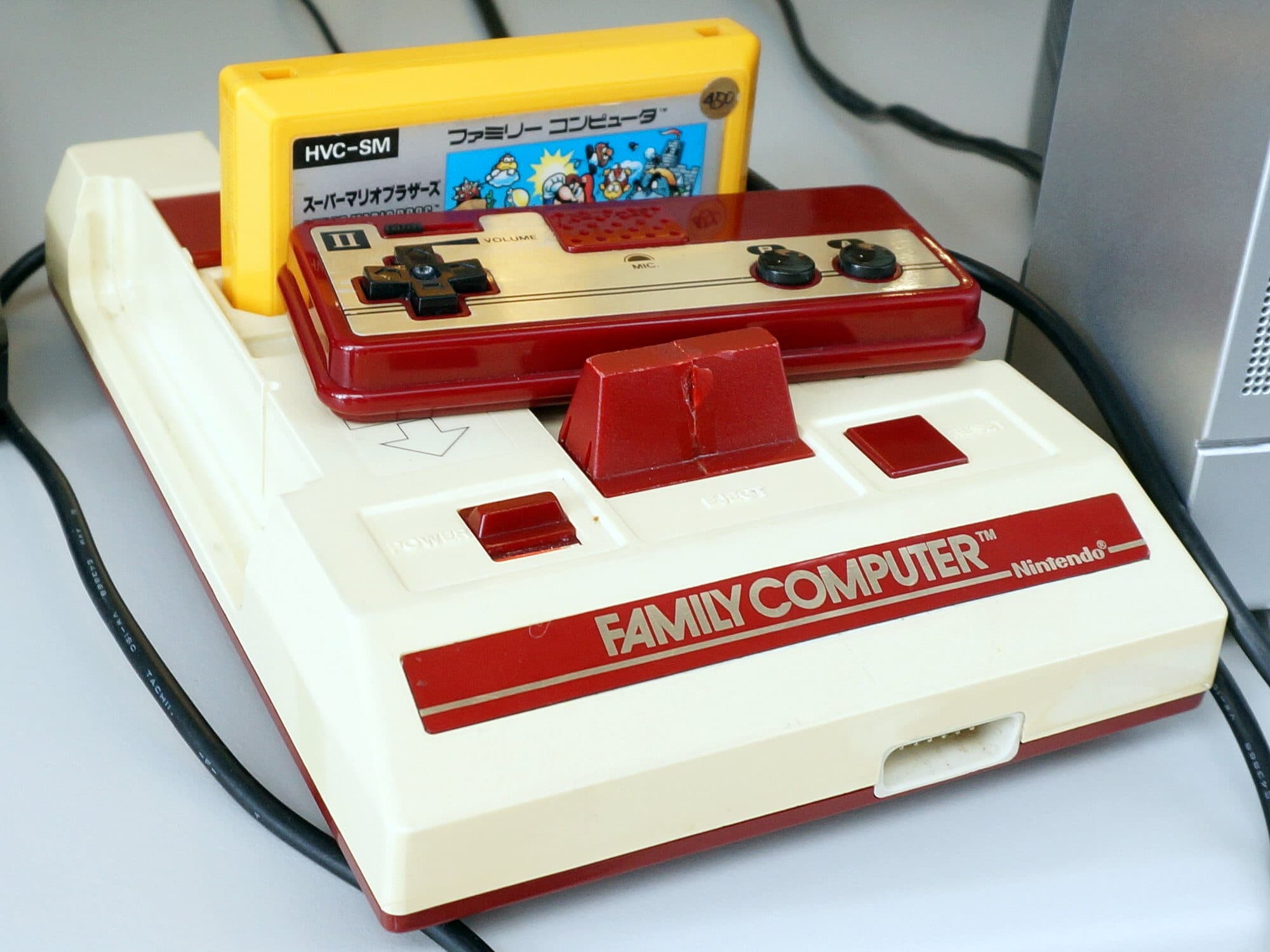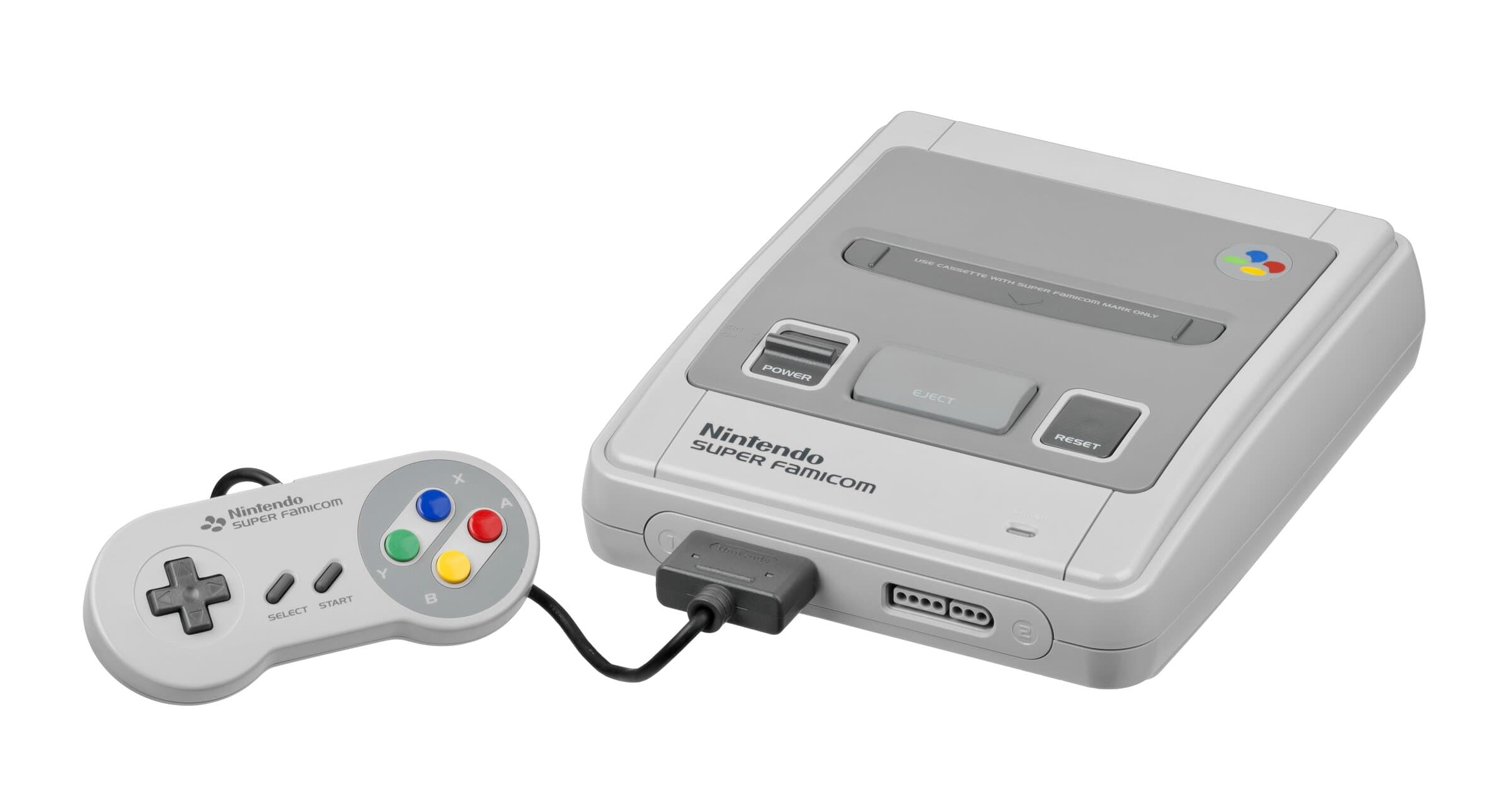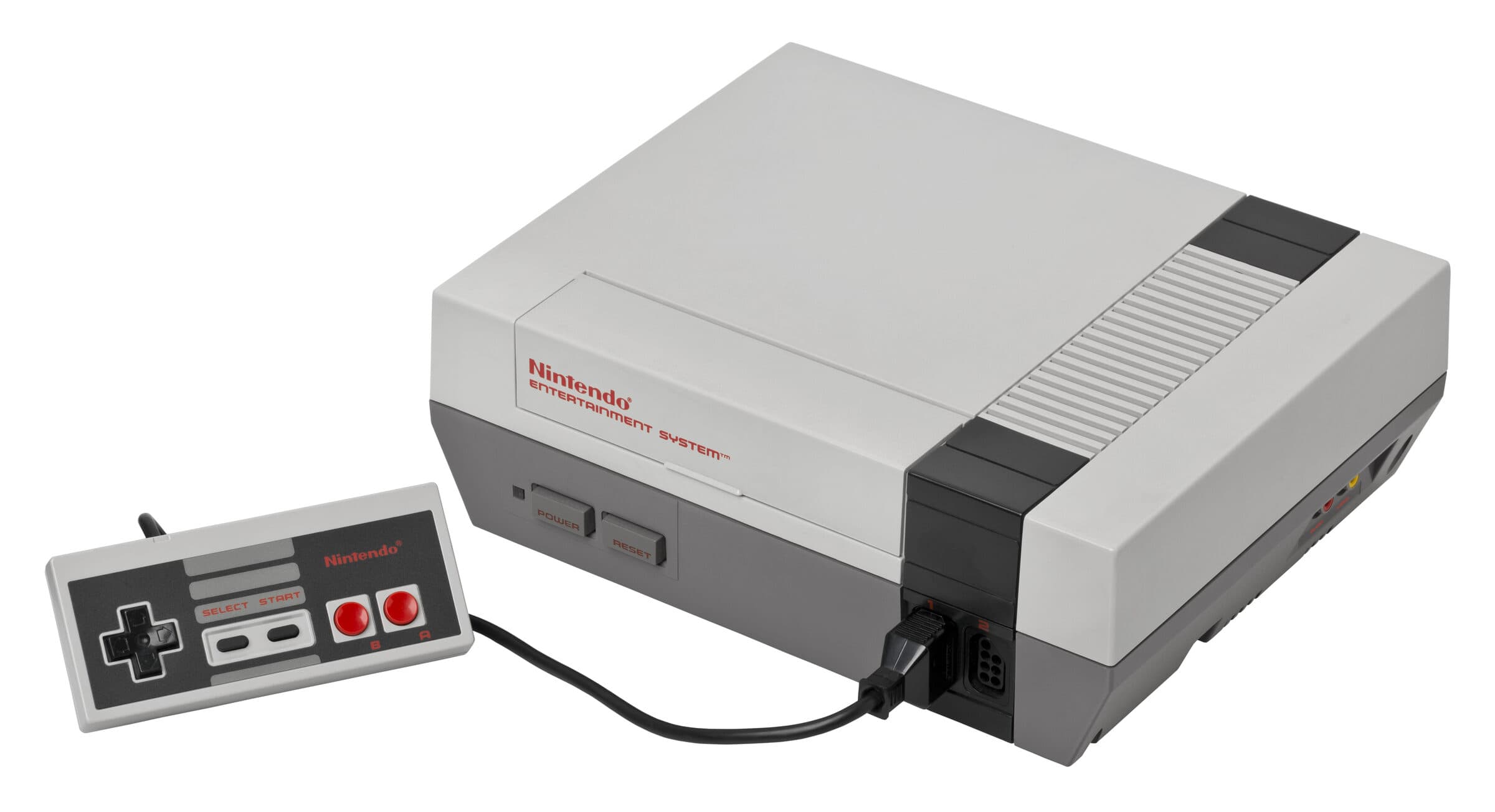
The North American video game market collapsed in 1983. Atari overproduced cartridges nobody wanted, retailers buried the inventory in landfills, and the conventional wisdom became that home consoles were a fad whose time had passed. Two years later Nintendo shipped a re-skinned Famicom called the Nintendo Entertainment System into a market that had effectively ceased to exist, and revived it almost single-handedly.
What's inside
The NES is a Ricoh 2A03 wrapped in plastic. The 2A03 is Nintendo's modified MOS 6502 with the decimal mode stripped out and a five-channel audio synthesiser bolted on. It runs at 1.79 MHz on NTSC, has access to 2 KB of working RAM, and offloads all the graphics work to a separate Picture Processing Unit, the 2C02. The PPU could draw 64 sprites onscreen, eight per scanline, in a 256 by 240 pixel field. That is not very many sprites and it is not very many pixels, and the entire visual identity of the third console generation grew out of designing within those constraints.
What it shipped with
In North America the NES launched in late 1985 in two configurations: a basic Control Deck with two grey rectangle controllers, and the Deluxe Set, which threw in R.O.B. the Robotic Operating Buddy and a Zapper light gun. The Deluxe Set was a marketing gambit: Nintendo sold the NES to toy store buyers as a toy with electronic accessories, not a games console, because the trade had no faith left in games consoles. R.O.B. did almost nothing useful. He worked.
The catalogue
The NES library is one of the densest in console history. Super Mario Bros. (bundled), The Legend of Zelda, Metroid, Castlevania, Mega Man, Final Fantasy, Dragon Quest, Punch-Out!!, Excitebike, Tecmo Bowl, Contra. Nintendo's first-party output through 1990 invented or codified most of the genres that still anchor the industry. The third-party catalogue is huge and patchy, the way third-party catalogues always are.
Why it still matters
Two reasons. First: the NES is where modern video game design grammar comes from. Run-and-jump platforming, the overworld map, the save battery, the mid-boss, the password screen. Second: the NES established that Nintendo would do whatever it took to maintain quality and platform control, which is the through line from the Seal of Quality to today's first-party-leans Switch lineup. You can argue with the politics. The console works.