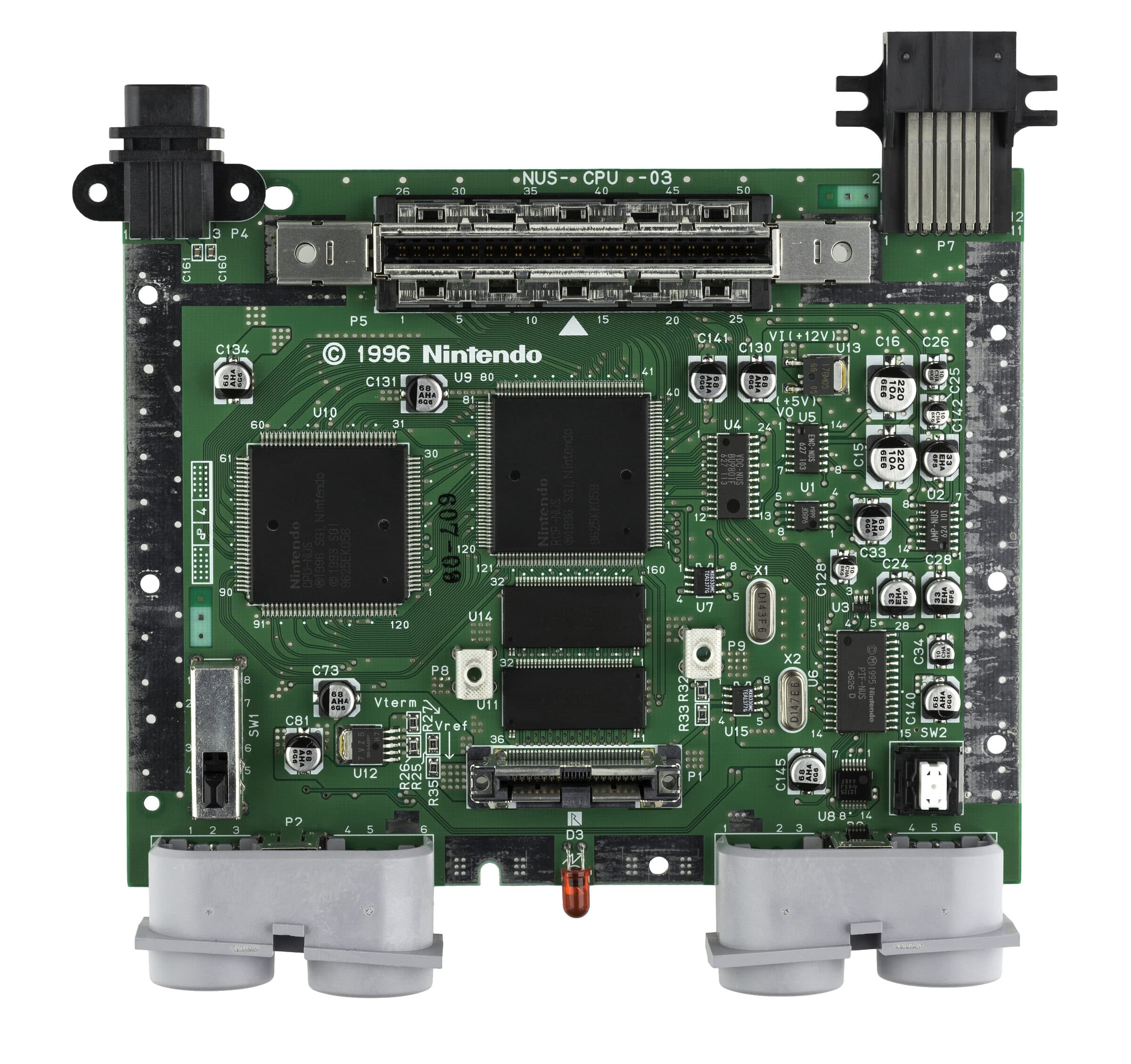
The Nintendo 64 was the only fifth-generation home console to ship without RGB output by default in PAL and NTSC-U regions. Composite video was your option, sometimes S-Video. On a CRT both looked acceptable. On a modern OSSC or Framemeister, both look like a war crime.
What the mod does
The N64's video signal is RGB internally; the chips inside the console produce red, green and blue separately, then deliberately blend them into a fuzzier signal for output. The RGB mod taps the original three signals before the blender stage and routes them out via a buffer chip (commonly the THS7374) to a properly-pinned multi-out connector.
Result: pixel-accurate, sharp, properly-coloured output via SCART or component. Suddenly Wave Race 64's water has the right blue and Banjo-Kazooie's dialogue text is legible.
Difficulty
Intermediate. Soldering on a console PCB, requires a steady hand and a reasonable iron. ~30 traces total to lift, route and solder. If you've done a Game Boy backlight mod, you can do this. If you haven't, do that first.
The board you're dropping in is pre-fabricated and well-documented; the work is mostly soldering, not engineering.
Reversible
Yes. Every connection is additive (jumper wires soldered to existing pads). Lift the board, snip the wires, and the console returns to stock composite output. No traces are cut on most kit designs.
Tools
- Temperature-controlled soldering iron (300°C+)
- Fine solder (60/40 or lead-free, your preference)
- Flux paste
- Desoldering braid
- Magnification (loupe or USB microscope)
- Multimeter for continuity testing